
English| EUR
Suggested for you
More currencies
Choose a language
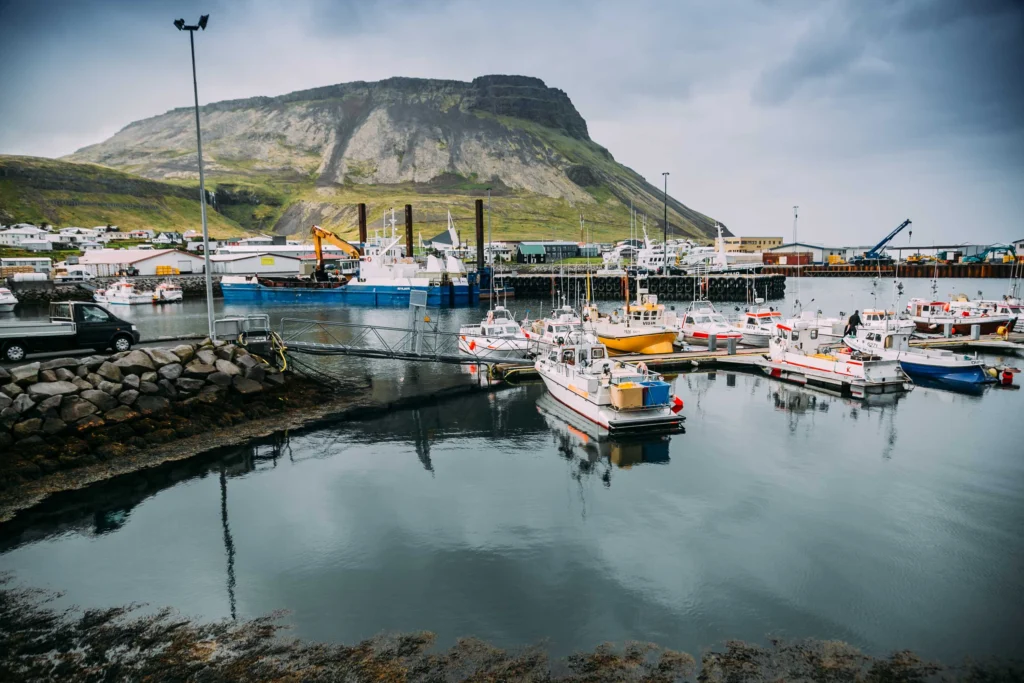
Two Icelandic harbors dominate the country's whale trips, and they are not interchangeable. One sits inside a capital-city bay; the other opens onto Breiðafjörður, at the foot of Snæfellsjökull. This olafsvik vs reykjavik whale watching guide sets out what actually separates them.
Quick answer
Ólafsvík boats reach feeding grounds in roughly 15–30 minutes because the harbor at Norðurtangi 9, 355 Ólafsvík opens directly onto deep water, while Reykjavík vessels cross the shallower Faxaflói first. Ólafsvík is known for sperm whales and orcas; Reykjavík more often produces minke and white-beaked dolphins. Harbor entry itself is free, at 0 ISK.
Breiðafjörður holds roughly half of Iceland's coastline within a single bay system, and the shelf edge beyond Ólafsvík drops away fast enough that sperm whales — deep divers that need several hundred metres under the keel — turn up within sight of Snæfellsjökull. That geography is the whole argument in olafsvik vs reykjavik whale watching. Faxaflói, the bay Reykjavík fleets work, is broad, shallow and productive, but it is a different habitat producing a different cast list. What a reader is actually choosing between is two trade-offs. Reykjavík costs nothing extra to reach if a traveller is already in the capital; the old harbor sits a short walk from Laugavegur and the Harpa concert hall, and departures run frequently through summer. The trade is sailing time: much of the trip is spent transiting open water before anything surfaces. Ólafsvík reverses that. Reaching the Snæfellsnes peninsula takes real driving — north through Borgarnes, then west along Route 54 — but once the boat clears the breakwater at Norðurtangi, the productive water begins almost immediately. Sightings skew toward sperm whales and, in the right conditions, orca pods hunting herring. Humpbacks, harbour porpoises and white-beaked dolphins appear at both. The second factor is exposure. Faxaflói's shelter means Reykjavík sailings are cancelled less often. Breiðafjörður is more open to North Atlantic weather, so an Ólafsvík plan needs slack in it — a spare afternoon, or a night on the peninsula rather than a same-day return. Anyone weighing olafsvik vs reykjavik whale watching against a tight itinerary should treat that flexibility as part of the price. The practical reading of all this is straightforward. Travellers with two or three days and a rental car generally get more from the Snæfellsnes harbor, where the peninsula's other draws — Kirkjufell, the Búðir black church, Djúpalónssandur — fill the hours around a sailing. Travellers on a single Reykjavík night are better served by the capital's own fleet, and lose less than they might expect. The recommended arrival window in Ólafsvík runs 08:00–16:00, which is when light conditions and typical departures line up; the harbor itself carries no admission, though boat boarding does. Species lists, sailing schedules and current conditions are worth confirming directly with the operator at +354 546 6808 before committing a day to either coast.
“The shelf edge beyond Ólafsvík drops away fast enough that sperm whales turn up within sight of Snæfellsjökull.”
Choosing between whale watching in Ólafsvík and Reykjavík involves balancing the unique marine ecosystem of the Snæfellsnes Peninsula against the urban accessibility of the capital. This comparison highlights the practical differences to assist in your travel planning.
| Ólafsvík Remote Coastal Recommended | Reykjavík Urban Harbor | |
|---|---|---|
| Setting | Snæfellsnes Peninsula coastline | Reykjavík city harbor |
| Primary Wildlife | Orcas and Sperm whales | Minke whales and Dolphins |
| Travel distance from Reykjavik | 200 km | 0 km |
| Departure Frequency | Limited daily departures | Multiple daily departures |
| Crowd Levels | Lower density | Higher density |
| Atmosphere | Secluded and rugged | Busy and accessible |
Verdict: Select Ólafsvík for specialized wildlife encounters in a remote setting, or choose Reykjavík for convenient logistics and frequent departures from the city center.
The best arrival window for whale watching in Ólafsvík is 08:00–16:00, which aligns with optimal light conditions and typical boat departure times. Seasonal factors further influence success, as wildlife patterns and daylight availability change significantly throughout the year.
Cool 2-10°C
Early season offers sightings of orcas and migrating species in calmer waters.
Mild 8-13°C
Peak period for minke whales and Atlantic white-sided dolphins with frequent activity.
Chilly 3-8°C
Wildlife remains active, though shorter daylight hours reduce the available observation window.
—
This window provides the most consistent daylight for spotting animals in the surrounding bays.
Verdict: The optimal period for whale watching is from April to August, arriving consistently within the 08:00–16:00 window.
Ólafsvík is located on the northern coast of the Snæfellsnes Peninsula, requiring a drive from the capital, whereas Reykjavik harbor is centrally situated within the city. Visitors traveling to Ólafsvík typically rely on private vehicles or rental cars to navigate the route via Road 54.
Road 54 to Ólafsvík
Strætó Route 57 from BSI Bus Terminal to Vegamót, then connection
For the best experience, target your arrival window between 08:00–16:00 to align with typical departure schedules and optimal light conditions. Navigate to Norðurtangi 9, 355 Ólafsvík, Iceland, where parking is available near the harbor area.
Access to the harbor area in Ólafsvík is provided at no cost, allowing visitors to view the facilities freely. Whale watching requires boarding a vessel, which necessitates a separate paid tour with an authorized operator.
Verdict: While the harbor area is free to enter, visitors must pay tour operator fees for whale watching, which vary based on the provider and season.
The harbor area in Olafsvik is accessible throughout the week to serve as the departure base for whale watching expeditions. Visitors may access the facility at any time of day.
Everything you need to know about olafsvik vs reykjavik whale watching
Choosing between olafsvik vs reykjavik whale watching depends on whether you prefer a remote coastal experience on the Snæfellsnes Peninsula or the convenience of the capital. Ólafsvík offers proximity to deep-water feeding grounds, while Reykjavik provides easy access to the Faxaflói Bay marine ecosystem.
When comparing olafsvik vs reykjavik whale watching, Ólafsvík is often favored for sightings of sperm whales and orcas due to its unique underwater topography. Reykjavik whale watching excursions are highly regarded for their consistent sightings of minke whales, white-beaked dolphins, and harbor porpoises.
While the harbor area at Norðurtangi 9 is accessible at all times, securing your spot on a boat for an olafsvik whale watching excursion is recommended to guarantee availability. You can visit the official site at https://lakitours.com to coordinate your trip logistics.
The best arrival window for wildlife spotting is 08:00–16:00, which provides optimal light conditions and matches typical departure times. This recommendation applies whether you are considering olafsvik vs reykjavik whale watching tours.
Entry to the harbor area is 0 ISK, as it is a public space. Please note that while harbor access is free, tour costs apply for boat boarding at all whale watching ports.
Choosing a smaller port like Ólafsvík often means less crowded departures and direct access to open ocean wildlife habitats. Reykjavik tours are more integrated with urban amenities and are ideal for travelers with limited time who still want to see Icelandic marine mammals.